

 Apple Podcasts
 Spotify
 Youtube Music
 Your Backsplash Should Be Planned On Day One
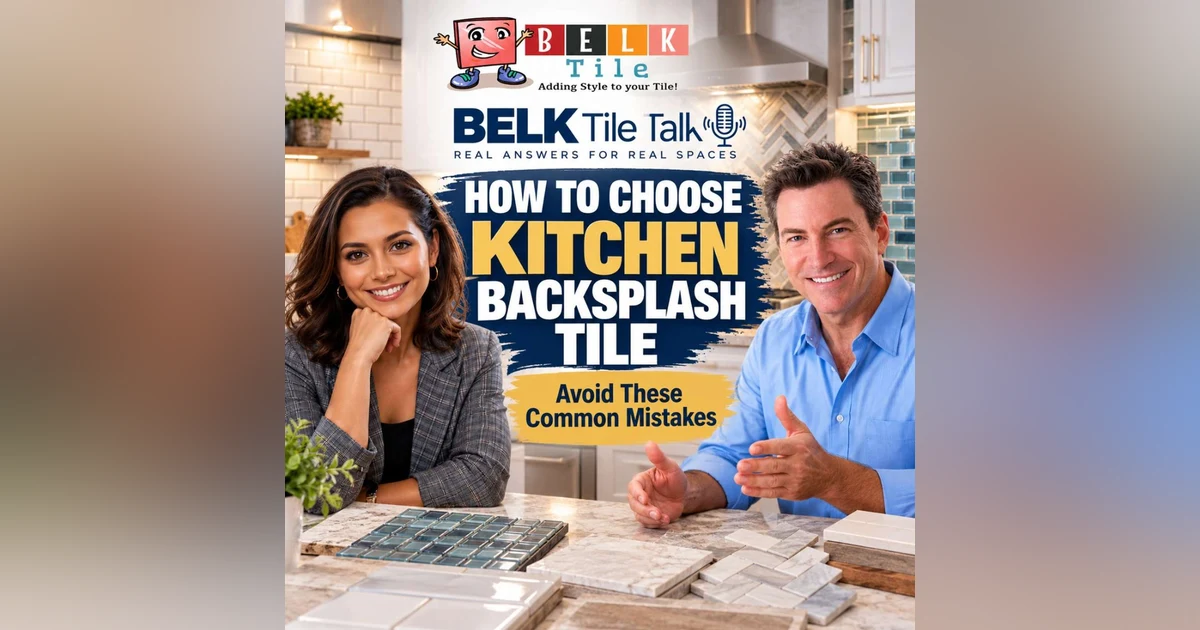

Choosing kitchen backsplash tile involves more than finding a color you like. The right backsplash needs to work with your cabinets, countertops, lighting, and the way you use your kitchen.
In this episode of BELK Tile Talk, Mike Belk and Abby Stuart discuss how to choose kitchen backsplash tile without making costly design mistakes. Mike compares ceramic, porcelain, glass, and natural stone backsplash options, explains how tile size and finish affect the finished look, and shares advice on coordinating your backsplash with countertops and cabinetry.
You'll also hear why grout color matters, when a bold backsplash makes sense, and how to narrow down your choices before ordering tile.
Explore Kitchen Backsplash Tile at BELK Tile
Read the Complete Kitchen Backsplash Buyer's Guide
What Is the Best Tile for Kitchen Backsplashes?
Whether you're updating an existing kitchen or planning a complete remodel, BELK Tile offers tile selection advice, design inspiration, and a wide range of backsplash materials to explore.
🎧 Thanks for Listening to the BELK Tile Podcast!
We appreciate you tuning in to The BELK Tile Podcast, where we talk all things tile — design inspiration, installation tips, and the latest in tile style and innovation.
👉 Stay Connected:
Follow us on social media for updates, behind-the-scenes content, and more tile inspiration:
💬 Enjoyed this episode?
Leave us a review on your favorite podcast platform — your feedback helps us grow and helps others discover the BELK Tile Podcast!
🌐 Visit us online at BELKTile.com
for premium backsplash, wall, and floor tiles, or explore more episodes right here on Podcast.BELKTile.com
00:26 - Backsplash Timing And The Big Mistake
01:52 - Choose One Star For Harmony
03:11 - Cabinet Undertones And Color Fights
04:33 - Dark Cabinets Need Smart Lighting
05:04 - Tile Materials And Real Tradeoffs
07:31 - Finish Choices For Real Life
08:01 - Tile Sizes Patterns And Labor Costs
08:39 - Grout Rules And The Caulk Line
09:57 - A Simple Process To Narrow Options
11:06 - Samples Lighting Tests And Where To Shop
Backsplash Timing And The Big Mistake
BelkyHow to improve your home style with tiles to make your home absolutely beautiful. Welcome to the Belt Tile Podcast. Here's your host, Mike Belt.
AbbyAll right, Mike, I have the question for you, and give me the honest truth here, not the diplomatic designer answer. When somebody remodels their kitchen, do they pick the backsplash first or do they wait until the cabinets and counters are already locked in?
MikeThe honest truth, it is kind of both, and that is exactly why people pull their hair out. I always call the backsplash the jewelry of the kitchen, right? Now you order the jewelry last, you want the countertop fabricated, slabs in place, real dimensions. But the concept, you have got to plan that on day one. You do not buy an entire outfit, get home, and realize the only necklace that works is rose gold when every zipper on your jacket is silver.
AbbyOh, the classic afterthought trap. I see clients fall into that all the time. Cabinets are installed, quartz is down, appliances arrive, and then someone looks up and says, Oh wait, we need something on that wall. And by then you are just settling for whatever does not actively clash.
MikeYep, you have backed yourself into a corner without realizing it. Because here is the thing: your cabinet color changes how the tile looks, and the tile reflects light right back onto your cabinets. They are practically married. If you lock one down in isolation, you end up refereeing a fight between undertones later
Choose One Star For Harmony
Mikeon.
AbbyWhich brings up the big question homeowners always agonize over who gets top billing, who is the star of the show, the countertop or the backsplash?
MikeSimple rule: pick one star, just one. Your cabinets and countertops take up way more visual real estate. So if your countertop has heavy movement, dramatic marble veining, or a busy granite, let the backsplash be the supporting actor, let it breathe.
AbbyNow hold on, Mike, I have to push back a little. When people hear supporting actor, they panic and assume you mean boring white subway tile, and suddenly every kitchen on the block looks identical.
MikeFair enough, but quiet does not have to mean boring at all. You can do a soft ceramic with handcrafted texture, a subtle glass, or a nice honed finish. The golden rule is coordination beats imitation. Do not try to match every single swirl in that quartz slab with a faux marble tile. When two different materials try to pretend they are the same thing, they just look cheap next to each other. Pull one subtle undertone out and let it whisper.
AbbyOkay, so flip the script. What if someone went super quiet on the counter? Solid white quartz or soapstone?
MikeOh, then game on. That is when your backsplash takes center stage, herringbone patterns, handmade zeelege, rich emerald greens, bold mosaics, go for it. You can do drama on both, sure, but pulling that off without giving yourself a headache takes serious design acrobatics. For most kitchens, one focal point feels harmonious.
Cabinet Undertones And Color Fights
AbbyLet us talk cabinets, because undertones are where I have literally seen homeowners melt down in showrooms. Take white cabinets. Everyone thinks, hey, white goes with everything, easy choice, not so fast, right?
MikeOh boy, white is definitely not just white. You have bright, cool whites, warm, creamy ivories, and linen tones. If you put a cool, icy white tile up against creamy, off-white cabinets, suddenly those expensive cabinets look dingy and yellowed. Or if you try to match whites exactly and miss by 2%, it looks like an accident. Ignore the word white on the box and look at the actual warmth underneath.
AbbyAnd gray cabinets are sneaky too. Gray is almost never pure neutral. It is secretly hiding blue, green, or violet undertones.
MikeEvery single time. If your gray leans cool blue and you bring home a warm beige tile, they will fight every time you turn on the kitchen lights. You walk in and think, why does this feel weird? Stick with crisp whites, cool neutrals, or a clean matte finish that lets the cabinet tone do its thing.
AbbyWhat about wood tones? Stained white oak and walnut are having such a massive moment right now.
MikeLook at the wood temperature. White oak usually leans golden and warm, cherry pulls red, while walnut sits cooler and richer. Earthy greens, warm creams, and soft terracottas look incredible with wood grains. My personal cautionary note: be careful with super dark tiles against rich wood. It can soak up all your light and turn your kitchen into a dark cavern.
AbbySpeaking of caverns,
Dark Cabinets Need Smart Lighting
Abbydark cabinets like navy or matte black, that moody look is all over social media. How do you pull that off without cooking in a cave?
MikeYou have two distinct plays. One, go high contrast with light tiles, soft white, pale gray honed limestone so the dark cabinetry pops like architecture. Or two, lean all the way into the moodiness with deep saturated tile. But if you do that, please install proper under cabinet lighting. Do not treat task lighting as an afterthought because dark walls swallow lumens like crazy.
Tile Materials And Real Tradeoffs
AbbyAlright, let us dive into materials. And regular listeners know this. I cannot stand it when someone claims one tile material is objectively the best. Mike, break down the honest trade-offs between ceramic, porcelain, glass, and stone.
MikeThere is no single best, just what is best for your lifestyle. Ceramic is the everyday workhorse. It is budget-friendly, usually around $3 to $8 a square foot for materials in our guides, easy to cut, and a breeze to wipe down with a damp cloth. If you are doing your own installation on a weekend, ceramic is your best friend. The downside: the clay body underneath is softer, though on a backsplash you are not dropping heavy iron skillets against the wall like on a floor.
AbbyAnd porcelain is basically ceramic that spent extra time hitting the gym.
MikeExactly. Fired at much higher temperatures, ultra dense and almost zero water absorption. If you have a high output gas range, porcelain can handle the heat and grease splatter all day long. But it is harder to cut, usually requires a diamond wet saw blade and costs a bit more, roughly $5 to $12 a square foot.
AbbyNow glass tile is my absolute weakness. That luminous, watery reflection in a kitchen with limited windows just makes the whole room sparkle.
MikeIt looks stunning, no question. Totally non-porous, so tomato sauce cannot soak into it. But here is the catch. It shows every fingerprint, water streak, and steam spot. Plus, installing glass is tricky. You must use a pure white mortar because standard gray mortar will shadow right through the tile and ruin your color. And always, always check the manufacturer instructions for that specific glass because adhesives vary.
AbbyThen comes natural stone. Gorgeous organic marble or travertine. But every designer has that client who loved marble until someone squeezed a lime wedge nearby.
MikeOh yeah, the dreaded acid etch. Natural stone has sole, no two pieces look identical. But it is porous, you will need to seal it, usually once a year in a kitchen environment. Lemon juice, balsamic vinegar, wine, they will etch polished marble in seconds. If you want stone, go with a honed or satin finish. Honed stone hides tiny etches and scuffs way better than a mirror polish.
AbbyWhat about artisanal tiles, handcrafted zay liege and terracotta? I see them everywhere, but they are not for the faint of heart, are they?
MikeThey are gorgeous, but they demand respect. They are irregular by design, the edges are uneven, the surface has dips, the colors vary piece to piece. You need to dry lay them out of multiple boxes before putting them up. If perfectly straight lines give you peace of mind, Zay Liege will drive you crazy. You have to embrace the wabi-sabi imperfection.
Finish Choices For Real Life
AbbySpeaking of finishes, glossy versus matte, is that just an aesthetic choice or is there a maintenance side to it too?
MikeIt is definitely a lifestyle choice. Glossy reflects light and cleans off smoothly, but it highlights oil splatters under your range hood. Matte hides smudges beautifully, but if a matte tile has heavy texture, cooking grease can cling to the micro crevices. If you fry bacon five nights a week, a smooth satin finish is your sweet spot. If your oven is strictly for takeout storage, pick whichever look makes your heart sing.
Tile Sizes Patterns And Labor Costs
AbbyNow let us talk sizes and shapes. Big difference between a tiny mosaic sheet and a large format slab, right?
MikeNight and day, tiny penny rounds or one-inch mosaics look charming, but you are creating miles of grout joints right behind your cooktop. That means more grout to scrub. Classic 3x6 subway is timeless, but elongated formats like 2x8 or stacked vertical tiles feel fresh and make ceilings look taller. And if you want herringbone, remember two things: order 15% extra for all those diagonal cuts, and expect your installer to charge 20 to 35% more in labor. Herringbone takes real patience and
Grout Rules And The Caulk Line
Mikeskill.
AbbyAnd then there is Grout, the unsung hero or the villain, depending on how you pick it. People always treat Grout like an afterthought at the register.
MikeGrout completely transforms the tile. A matching grout makes the wall look seamless and calm. A light gray grout provides soft definition and forgives daily dust. But high contrast like charcoal grout with bright white subway tile? That turns your wall into an intense graphic grid. And let me warn you, dark grout on white tile tells the truth about everything. If your wall has a dip or your cuts are slightly off, high contrast grout points a neon finger right at it.
AbbyWhat about technical grout rules, sanded versus unsanded or epoxy?
MikeKeep it simple. Unsanded for joints an eighth of an inch or narrower, and for polished stone or delicate glass so you do not scratch the surface. Sanded for wider joints. And behind the cooktop, consider an epoxy or high performance polymer grout like Mape Ultra Color Plus FA or Starlight Pro. They resist grease stains without needing annual sealer. And here is my number one pro tip: never grout the joint where the countertop meets the tile wall. That 90-degree seam must be filled with flexible color-matched silicone caulk, or you can use clear silicone as well. Houses settle and expand. Grout there will crack every single time.
AbbyThat caul tip alone will save somebody hundreds of dollars in drywall
A Simple Process To Narrow Options
Abbyrepair. Now, Mike, you have thousands of tile styles on Belk Tile. When a homeowner is paralyzed by choices, what is your step-by-step process to get them from 50 options down to two or three finalists?
MikeFirst, stop browsing Instagram at 2 in the morning. Step back and list what is already set in stone in your kitchen, cabinets, counters, flooring, and hardware finish. Decide right then whether your backsplash is going to be the subtle bridge or the showstopper. That immediately eliminates 80% of the catalog. Then order actual physical samples of your top three finalists. Do not trust your laptop screen.
AbbyAnd do not leave them laying flat on the island either.
MikeExactly right, Abby. Prop them up vertically, right against the wall under your cabinets. Look at them in the morning sunlight, in the afternoon shadow, and at night under your actual kitchen bulbs. A warm 2700 Kelvin LED bulb will make a tile look completely different than cool daylight. If there is a hidden clashing undertone, that is when you catch it before thin set hits the wall.
AbbySuch good advice. And remember to save an extra box of tile in the garage after installation because die lots change and styles get discontinued. Mike, where can people go to explore styles and dive into these
Samples Lighting Tests And Where To Shop
Abbyguides?
MikeHead over to belktile.com. You can browse all the kitchen backsplash collections, filter easily by material, color, finish, and shape, and read through our selection and installation guides. Use the website to narrow down your vision, then order physical color samples so you can see them in your real kitchen space. If a sample will not work, you can always order a full sheet to see it in your space.
AbbyBecause at the end of the day, a backsplash has to work with your cabinets, your lighting, and how you actually cook and live, not just look pretty in a catalog render.
MikeSpot on. Order your samples, tape them up on the wall, and see how they feel in your home before you commit. You will thank yourself later.
BelkyYou've been listening to the Belt Tile Podcast. When it comes to creating a beautiful home using tiles, this is the podcast for products. We've got some useful practical information from this guy.